
Decoding Eligible And Non-Eligible Dividends

Contents
Share
Have you ever wondered what the difference between eligible and non-eligible dividends is? In this post, we’ll describe their differences and their effects on your personal taxes.
What’s The Difference Between Eligible And Non-Eligible Dividends
Dividends are payments made by a corporation from its earnings to its shareholders. Unlike wages, which are reflected on the income statement, dividends come from the company’s equity and are recorded on the balance sheet. Two types of common dividends are eligible and non-eligible dividends.
What Are Eligible Dividends?
Eligible dividends represent a specific category of dividends that are paid out by Canadian corporations to their shareholders from profits taxed at the general corporate rate. These dividends are often associated with larger corporations, though not exclusively so.
The small business deduction (SBD) allows eligible businesses to receive a reduced corporate tax rate for income up to $500,000. Corporations with over $500,000 in income are taxed at a higher tax rate, called the general corporate rate, for earnings over $500,000.
The General Rate Income Pool (GRIP) plays a pivotal role in the distribution of eligible dividends. GRIP is essentially an account that tracks a private corporation’s “room” to pay out eligible dividends. It accumulates the portion of a corporation’s retained earnings taxed at the general corporate rate. Before declaring an eligible dividend, corporations must ensure they have a positive GRIP balance, as this balance determines the maximum amount of eligible dividends that can be distributed.
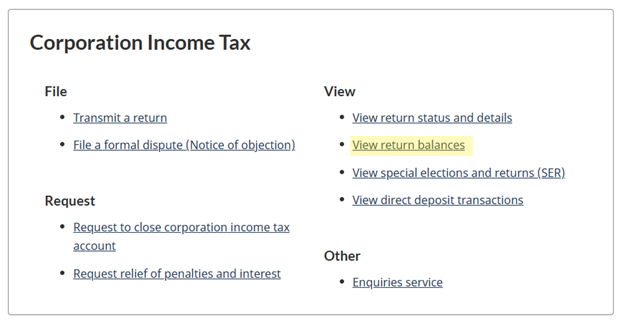
You can view your corporation’s GRIP balance by logging into My Business Account and clicking “View return balances”.
What Are Non-Eligible Dividends?
Non-eligible dividends are dividends distributed by Canadian corporations to their shareholders from profits taxed at the small business rate or other preferential rates. Typically, these dividends are associated with smaller, private corporations.
The primary source of ineligible dividends is a corporation’s income taxed at the small business rate. This encompasses most active business income earned by Canadian-controlled private corporations (CCPCs) up to the SBD limit of $500,000. Beyond this threshold, any additional income is taxed at the general corporate rate and may give rise to eligible dividends.
Reporting Eligible and Non-Eligible Dividends On T5 Slips
If the shareholder of the business has received either eligible or non-eligible dividends from their business, they will receive a T5 slip to report the income on their personal tax return.
Eligible and non-eligible dividends are taxed differently when paying personal tax, so each appears differently on the T5 slip.
The actual amount of eligible dividends received is reported in box 24, and the actual amount of non-eligible dividends is reported in box 10 of the T5 slip.
Because eligible and non-eligible dividends are paid from earnings taxed at different rates, there are a couple of more steps to calculating amounts reported on a personal tax return. This is to prevent double taxation. The concept of tax integration ensures that income isn’t double taxed and is discussed below.
What Is The Dividend Gross-Up?
A dividend gross-up is a way to account for the taxes a corporation has already paid on its profits. When an individual receives a dividend (a portion of the company’s profits), the amount they get is “grossed up” or increased on their personal tax return. This higher amount represents the pre-tax profit of the corporation. By doing this, the individual is taxed as if they earned the corporation’s original profit, ensuring they get credit for the taxes the corporation already paid.
It’s like adjusting the dividend amount to show how much the company earned before paying its taxes, so the individual isn’t unfairly taxed twice on the same money.
On a T5 slip, the grossed-up amount is called the “taxable amount of dividends,” and either appears in box 25 for eligible dividends or box 11 for non-eligible dividends.
What Is The Dividend Tax Credit (DTC)?
When a company pays you dividends, they come from profits that have already been taxed at the corporate level. To avoid double taxation (meaning you getting taxed again on the same money), the government provides a “credit” to offset some of the tax owed on these dividends. This credit is called the Dividend Tax Credit (DTC). It helps reduce owing on the dividends received by the shareholder. The DTC rates differ for both eligible and non-eligible dividends.
What Is Integration?
Integration is a principle in the Canadian tax system designed to ensure that an individual receives the same amount of money after taxes, whether they earn income directly or through a corporation. In other words, it aims to balance the taxes so that the total tax paid remains consistent, regardless of how the income is earned.
Think of it like this: Whether you take money from your business as a salary (like a regular paycheque) or as a dividend (a share of the profits), the tax system is set up so that, in the end, you pay a similar amount in taxes. This fairness in taxation is what is referred to as “integration.”
An Example Of Integration
The example above is simplified but shows that regardless of whether a business owner receives eligible dividends, non-eligible dividends, or salary from their business, the amount received personally after tax is almost the same.
Is It Better To Receive Salary Or Dividends?
Although the concept of integration shows that the net amount you receive from dividends or wages is similar, there are some pros and cons of each that could affect the shareholders individually depending on their circumstances.
To learn more about the differences between dividends and wages, check out our blog post on dividends vs salary.
Conclusion
There are two common types of dividends a business owner may receive from their company, eligible and non-eligible dividends.
A company can pay eligible dividends if it has a GRIP balance, meaning it paid tax at the general tax rate. Because of the higher tax rate the company pays, an eligible dividend receives a dividend tax credit to reduce the tax paid personally to avoid double taxation.
Non-eligible dividends are received when a company is eligible for the small business deduction and pays a lower tax rate than a company with a GRIP balance. Non-eligible dividends also receive a dividend tax credit but at a lower rate than eligible dividends because the company paid a lower corporate tax rate.
Although eligible dividends result in less personal tax than non-eligible dividends, the Canadian tax system’s integration principle ensures fair taxation, whether income is earned from eligible dividends, non-eligible dividends, or salary.